Beating RBT Test Anxiety: Tactics That Actually Work
Evidence-based approaches for people whose problem is not the material — including a pre-exam routine, in-the-moment resets, and how to interrupt a spiral at minute forty.
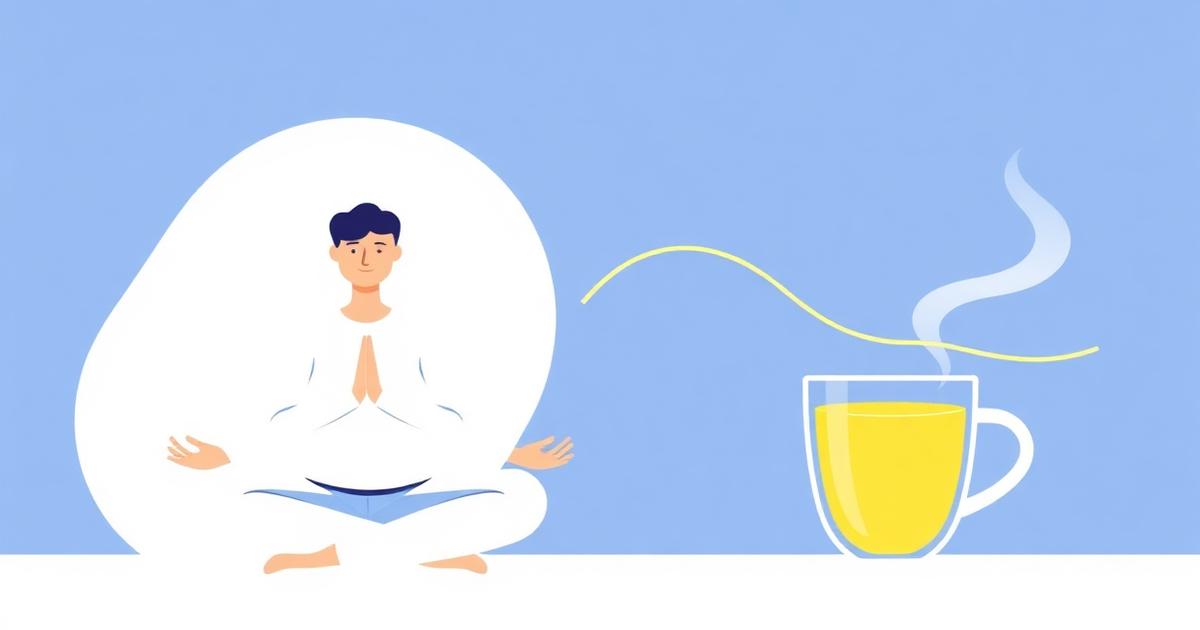
Some people fail the RBT exam despite knowing the material. They score above 85% on every practice test, walk into the testing center, and go blank on question three.
If that is your pattern, more studying is not the fix. Anxiety is a separate problem and it responds to separate techniques.
Why anxiety costs points
Under high stress, working memory narrows. That matters enormously on this exam, because RBT items are short scenarios that require holding several elements in mind at once — the antecedent, the consequence, the role boundary, and four options.
When working memory is consumed by monitoring your own panic, there is less capacity left for the reasoning. You are not "blanking" because the knowledge disappeared. You are blanking because the retrieval process is competing with a threat response.
The good news: this is trainable.
Preparation is the strongest anxiolytic
Nothing reduces exam anxiety more reliably than legitimate familiarity with the exam. Three specific forms of preparation do the most work:
1. Full-length timed practice runs. Anxiety spikes at novelty. The third time you sit for 85 questions in 90 minutes, your body treats it as a known event rather than an emergency. Do at least two, preferably at the same time of day as your appointment.
2. Simulating the conditions. No phone, no notes, no pausing, no coffee refill. If you always practice with comforts you will not have, you have not practiced the real thing.
3. A readiness bar you actually meet. Two timed full-lengths at 80% or better, no domain under 70%. Anxiety fed by a genuine suspicion that you are not ready is not irrational — it is information. Meet the bar and the feeling changes on its own.
The week before
- Protect sleep. Sleep loss impairs retrieval and amplifies anxiety simultaneously. Two consistent nights matter more than one heroic one.
- Keep caffeine at your normal dose. Exam-day double espressos convert into physical symptoms that your brain then interprets as panic.
- Move your body daily. Even a twenty-minute walk reduces baseline physiological arousal. This is one of the better-supported interventions available.
- Stop new material 48 hours out. Late cramming increases the sense that there is an endless amount you do not know.
The morning of
Build a routine and follow it exactly. Routines reduce decision load, and decision load is arousal.
- Wake at your usual time
- Eat something with protein
- Your normal caffeine, no more
- Leave with a large time buffer — rushing is arousal you carry into the room
- Bring layers
Skip the last-minute review of your weakest domain. Encountering something you do not know twenty minutes before check-in produces a spike with no time to resolve it.
In the room: two techniques that work under pressure
Extended exhale breathing. Inhale for four counts, exhale for six to eight. The lengthened exhale engages the parasympathetic response and lowers heart rate within about sixty seconds. It works because of the mechanism, not because it is calming to think about — do it whether or not it feels like it is helping.
Physical grounding. Feet flat, press them into the floor. Unclench your jaw. Drop your shoulders. Anxiety maintains itself partly through muscular tension, and interrupting the tension interrupts the loop.
Both are silent, invisible to a proctor, and take under a minute.
The reframe that helps most
Physiological arousal before a test and physiological arousal before something exciting are close to identical: elevated heart rate, alertness, slightly shallow breathing. The difference is interpretation.
Research on arousal reappraisal suggests that telling yourself "my body is getting ready" rather than "I am panicking" measurably improves performance. It is not positive thinking. It is a more accurate description of what is happening — your sympathetic nervous system is mobilizing resources, which is exactly what you want during an exam.
When you spiral mid-exam
It happens at around question 40 for most people. Three unfamiliar items in a row, and the thought arrives: I am failing this.
Interrupt it with a fixed protocol, decided in advance so you do not have to decide anything while dysregulated:
- Stop reading. Hands off the mouse.
- Three extended exhales. Feet pressed into the floor.
- Reality-check the arithmetic. You can miss a substantial number of questions and still pass. Three hard items in a row is statistically unremarkable, not a verdict.
- Restart on an easy question. Skip forward, answer something you know, and let one success re-establish momentum.
- Return to the hard ones on the review pass.
Ninety seconds spent on that protocol will recover more points than ninety seconds of staring at a question through a panic response.
The 25% rule
Every question has four options. A pure guess is worth 25%, and an eliminated-down-to-two guess is worth 50%. There is no penalty for guessing.
That means there is no such thing as a catastrophic question. The worst case for any individual item is a 25% chance instead of a certainty. Internalizing that removes the perceived stakes from each item, and the perceived stakes are what generate the freeze.
If anxiety is bigger than the exam
For some people, test anxiety is one expression of a broader anxiety condition, and self-help techniques are not sufficient. That is worth naming plainly.
- Testing accommodations exist and can be requested through the certifying body with documentation
- Cognitive behavioral approaches have strong evidence for test anxiety specifically
- Talking to a physician or therapist is not an admission of weakness; it is the same problem-solving you apply to everything else
Requesting accommodations is not cheating and it does not appear on your credential. It is the same principle you apply with clients — arranging the environment so the person can demonstrate what they actually know.
The last thing
You have prepared for this. On exam day, the goal is not to learn anything new — it is to let what you already know come out unobstructed. Every technique above serves that single purpose: get the panic out of the way so the knowledge can show up.
Then answer question one, and go.
More in Study Skills
A Realistic 2-Week RBT Study Schedule
A day-by-day plan for the fourteen days before your RBT exam, built around retrieval practice and blueprint weighting instead of rereading — with a lighter variant for people working full time.
4 min read
How to Use Flashcards for the RBT Exam Without Wasting Time
Flashcards work — but only if the cards are written correctly and reviewed on a schedule. Here is how to build a small deck that beats a large one, and which RBT concepts belong on cards at all.
4 min read
How to Study for the RBT Exam: A Four-Week Plan That Works
A week-by-week RBT study plan built on active recall, spaced repetition, and timed practice — plus the study habits that quietly waste your time.
7 min read
Discussion(0)
Ask a question about this topic or share what worked in your own RBT exam prep. Keep client details out of your comment.
Loading comments…