RBT Practice Exam: 85 Free Questions (2026)
How the real 85-question RBT exam is built, how scoring works, and how to use a free full-length practice test to find your weak domains before test day.
This guide explains exactly how the RBT practice exam on this site is built, how the real Registered Behavior Technician exam is scored, and how to use a full-length mock exam to find the domains that will cost you points. You will also get a short pre-exam checklist you can follow the week before your appointment.
Everything here is written for the 2026 RBT Task List 3.0, which is the version your exam will be based on.
What the real RBT exam looks like
The RBT exam is a computer-based multiple-choice test delivered at a Pearson VUE testing center or through remote proctoring. You get 85 questions and 90 minutes. That works out to a little over one minute per question, which is more time than most candidates expect.
Only 75 of those 85 questions count toward your score. The other 10 are unscored pilot items the BACB is testing for future exams. They are mixed in and unmarked, so treat every question as if it counts.
The domain breakdown
Questions are pulled from the six content areas of the RBT Task List. The scored items are distributed roughly like this:
- Measurement: about 12 questions
- Assessment: about 6 questions
- Skill Acquisition: about 24 questions
- Behavior Reduction: about 12 questions
- Documentation and Reporting: about 10 questions
- Professional Conduct and Scope of Practice: about 11 questions
Notice how lopsided that is. Skill Acquisition alone is close to a third of your score. Assessment is the smallest slice. Candidates who spend equal study time on all six areas are spending it badly.
The question style
Very few items ask you to recite a definition. Most give you a short clinical situation and ask what you would do, what the data show, or whether the action was inside your scope. You are being tested on judgment, not vocabulary.
That is why reading the task list on its own is not enough. You need practice questions that put terms into a session context.
How scoring works
Your raw number correct is converted into a scaled score between 0 and 250. The passing mark is 200. Scaling exists because different forms of the exam vary slightly in difficulty, so the BACB adjusts to keep the standard identical for everyone.
There is no fixed percentage that guarantees a pass, but a scaled score of 200 lands close to 80 percent correct on most forms. Aiming for 80 percent on full-length practice tests gives you a sensible buffer.
What your score report shows
Pass or fail, you get a report with performance by content area. If you fail, that report is the most useful study document you will ever receive, because it tells you which of the six domains sank you.
Our results screen is built to match that structure on purpose. You should never be surprised by the shape of your official report.
Guessing is free
There is no penalty for a wrong answer. Leave nothing blank. Flag anything uncertain, answer it anyway, and come back if time allows.
How this free RBT practice test mirrors the real thing
The free version on this site is not a random pile of questions. It is built to reproduce the conditions you will sit in.
Same length and same clock
The full mode gives you 85 questions and a visible 90-minute countdown. Sitting the whole thing in one block is the single best way to find out whether your accuracy holds up in the last twenty minutes. Most people lose points to fatigue, not to knowledge.
Same domain weighting
Questions are drawn in the same proportions as the real content areas, so a 24-question Skill Acquisition block carries the weight it deserves. A practice test with six questions per domain will give you a comfortable score and a false sense of readiness.
Written rationales on every item
Every question, right or wrong, has an expandable explanation. Reading the rationale on an item you guessed correctly is often worth more than reviewing an item you missed, because a lucky guess hides a gap.
Domain scoring and a next step
When you finish, you get an overall percentage, a readiness band, and a bar chart of percent correct in each of the six domains. Under it sits a recommendation naming your weakest area with a button that starts a focused quiz on that domain alone. That loop of test, diagnose, drill, retest is the whole point.
Free, and no account required
You can take the full exam without signing up. Creating a free account only adds saved history, so you can watch your score curve move across attempts and compare domain mastery over time.
How to use the mock exam in a study plan
A practice test is a measuring tool. Taking it ten times in a row does not teach you much. Space it out.
Three to four weeks out: baseline
Take the full 85-question exam cold, before you feel ready. The number will be low, and that is fine. What you want is the domain chart, not the score.
Two weeks out: drill the bottom two domains
Run single-domain quizzes on your two weakest areas and read every rationale. Rewrite the rationale in your own words. If you cannot explain why the wrong answers are wrong, you do not own the concept yet.
One week out: timed retake
Take a second full-length exam under real conditions. Phone away, one sitting, no pausing. Compare the two domain charts side by side to confirm the gaps closed instead of moving.
Two days out: light review only
Skim your saved rationales and the task list. Do not cram new material. Sleep matters more than one extra hour of questions.
Pre-exam tips that actually move your score
- Read the whole question before looking at the options. Many items hinge on one qualifier such as "first," "best," or "immediately."
- Rule out answers that require BCBA-level decisions. If an option has you modifying a program, running an assessment, or diagnosing, it is usually outside RBT scope and usually wrong.
- Answer as the protocol says, not as your clinic actually does. The exam tests the written standard.
- Watch for the difference between what you would do and what you would do first. Both options are often listed.
- Pace yourself in blocks. At the 45-minute mark you should be near question 43. If you are behind, speed up on the short items.
- Bring two forms of ID and arrive 30 minutes early. Administrative stress before the test costs real points.
- Use the flag tool early and generously. It is faster to revisit ten flagged items than to reread the whole form.
Frequently asked questions
Is this RBT practice exam really free?
Yes. All 85 questions, the timer, the rationales, and the domain scoring are free with no account and no card. An optional free account only saves your attempt history.
How many questions are on the real RBT exam?
There are 85 questions and 90 minutes. Seventy-five are scored and ten are unscored pilot items that are not identified during the test.
What score do I need to pass the RBT exam?
You need a scaled score of 200 out of 250. On most exam forms that sits near 80 percent correct, so treat 80 percent on a full-length practice test as your working target.
How many practice exams should I take before test day?
Two full-length attempts spaced a few weeks apart is enough for most candidates, with focused single-domain quizzes in between. Volume matters less than reading the rationale on every item you miss.
Are these questions the same as the real exam questions?
No. Real exam items are confidential. These are original questions written to the same task list, the same domain weighting, and the same scenario-based style.
Start your free RBT practice exam
The fastest way to know where you stand is to sit the whole thing once, cold, and read the chart it gives you. Take the full 85-question RBT practice exam, check your domain breakdown, then use the recommended quiz to attack your weakest area first.
More in Exam Prep
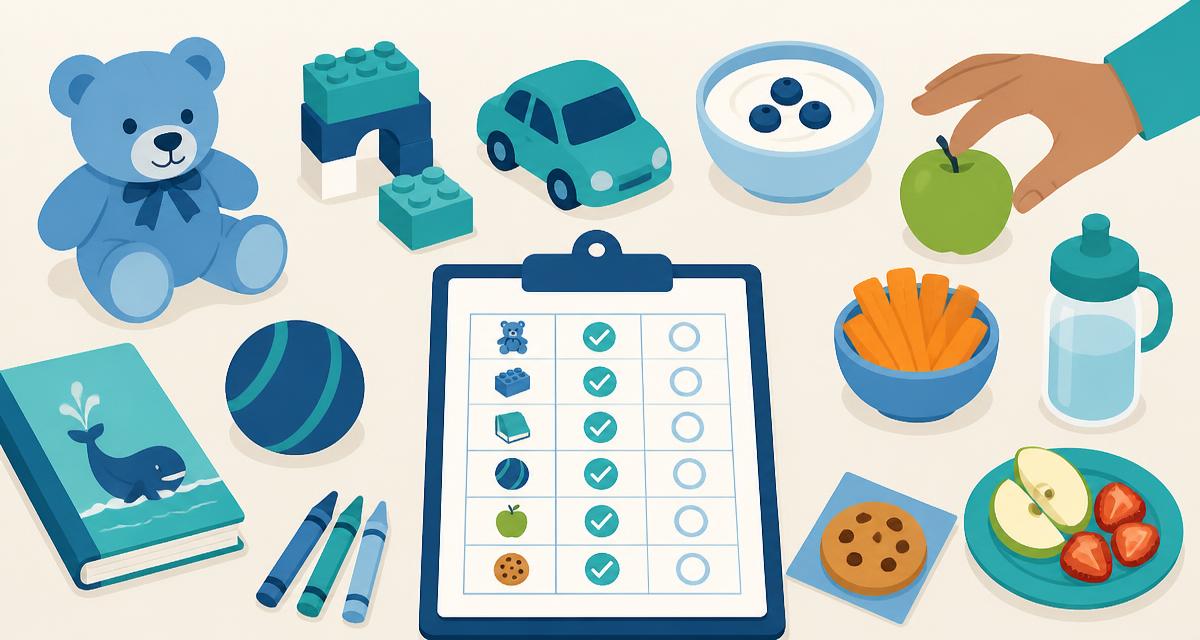
Preference Assessments RBTs Actually Run in Session
Free operant, single stimulus, paired stimulus, MSWO and MSW. A plain-language guide to the preference assessments RBTs run, how to record them, and which one the exam is describing.
5 min read
DTT vs. NET: How RBTs Run Both Teaching Formats
Discrete trial training and natural environment teaching are the two formats you will use most as an RBT. Here is how each one runs, when a BCBA picks one over the other, and how the exam tests the difference.
5 min read
RBT Exam Day Checklist: What to Bring and What to Expect
A practical, hour-by-hour walkthrough of RBT exam day — what to pack, what the check-in process looks like, and how to spend your first and last five minutes in the testing seat.
5 min read
Discussion(0)
Ask a question about this topic or share what worked in your own RBT exam prep. Keep client details out of your comment.
Loading comments…