ABC Data Collection: A Practical Guide for RBTs
Antecedent-Behavior-Consequence recording is the backbone of functional assessment support — and the most commonly mis-recorded data in the field. Here is how to do it correctly, with worked examples.
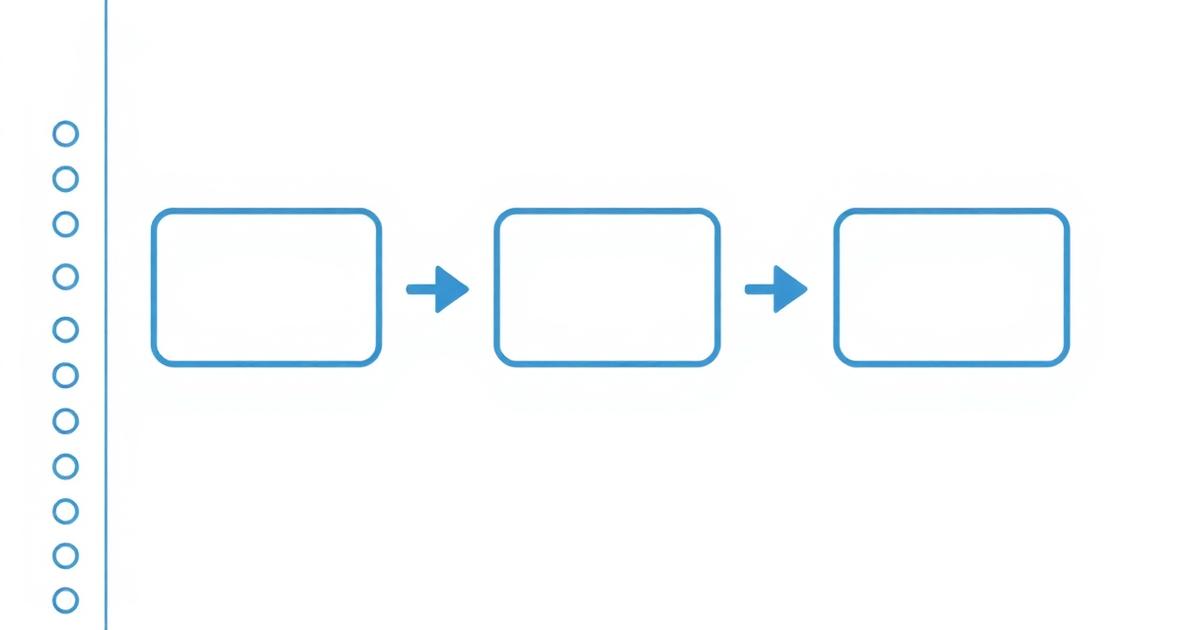
ABC data is deceptively simple. Three columns: what happened right before, what the person did, what happened right after. Almost every technician can describe it. Far fewer can record it in a way a supervisor can actually use.
The difference matters, because ABC data is the raw material for identifying function — and a functional hypothesis built on sloppy data produces an intervention that does not work.
What each column is for
Antecedent — the event immediately preceding the behavior. Immediately. Not "he had a rough morning." What happened in the few seconds before.
Behavior — the observable action, described so specifically that a stranger reading it could recognize it.
Consequence — what happened immediately after, focused on environmental change: what was removed, delivered, or altered, and by whom.
A worked example
Here is a real-shaped entry, first done badly, then correctly.
Badly recorded
| Antecedent | Behavior | Consequence |
|---|---|---|
| He was frustrated with the work | Had a meltdown | Calmed down after a while |
There is nothing here. No time, no observable behavior, no environmental change, and two inferences about internal states.
Correctly recorded
| Time | Antecedent | Behavior | Consequence |
|---|---|---|---|
| 10:14 | Instructor presented a 10-item math worksheet and said "start here" | Client swept materials off the desk and screamed for approximately 20 seconds | Instructor removed the worksheet and said "let's take a break"; client returned to seat after 2 minutes |
Now a supervisor can see a demand, a behavior, and demand removal. Repeated across several entries, that is an escape pattern.
Objective wording, column by column
Antecedent — record the event, not the story
- Poor: "Transition was hard for him"
- Better: "Timer sounded; instructor said 'iPad off, table time'"
Behavior — record the topography, not the label
- Poor: "Aggression"
- Better: "Closed-fist contact to instructor's forearm, three instances"
Consequence — record the environmental change, not your intent
- Poor: "I redirected him"
- Better: "Instructor blocked contact, restated instruction, and provided a partial physical prompt to complete the first item"
The test for any cell: could two people who observed the same event write approximately the same thing? If your wording depends on your interpretation, rewrite it.
Narrative versus structured ABC
| Format | How it works | Strength | Weakness |
|---|---|---|---|
| Narrative (open-ended) | Write free text for each occurrence | Captures nuance and unexpected variables | Slow; inconsistent across recorders |
| Structured (checklist) | Check predefined antecedents, behaviors, consequences | Fast; consistent; easy to summarize | Misses anything not on the list |
Structured checklists are more common in busy clinical settings and more likely to be what you use day to day. Narrative recording is more common when a supervisor is investigating a behavior nobody understands yet. Your program will specify which — do not switch formats on your own.
The five habits that ruin ABC data
1. Writing it up at the end of the session. Memory reconstructs, and it reconstructs toward your existing hypothesis. Record in the moment or as close to it as safety allows.
2. Recording only the dramatic episodes. If you only log the big incidents, your data describes intensity, not function. Log every occurrence that meets the operational definition.
3. Skipping the consequence column when you were busy. The consequence column is where function lives. An entry without it contributes almost nothing.
4. Including your interpretation. "Seeking attention" in the consequence column is a conclusion, not data — and drawing that conclusion is not the RBT's role.
5. Vague time stamps. "Morning" cannot be cross-referenced against a schedule, a medication time, or a staffing change. Use clock times.
What ABC data tells you — and who gets to say it
Across enough entries, patterns emerge:
| Repeated consequence | Suggests |
|---|---|
| Demand removed or delayed | Escape |
| Adult attention delivered, including reprimands | Attention |
| Preferred item or activity delivered | Access to tangibles |
| No consistent environmental change | Automatic |
Notice that reprimands count as attention. This surprises new technicians constantly, and it is a favorite exam item.
Here is the boundary that matters: you may notice these patterns and you should report them. You do not conclude the function and adjust the program. ABC data is descriptive assessment; determining function and designing intervention belong to the supervising behavior analyst. On the exam, any option where the technician independently diagnoses a function and changes the plan is wrong.
Contextual variables worth noting
ABC recording usually has a notes field, and it is underused. Things worth logging because they may function as motivating operations:
- Sleep disruption reported by the family
- Illness, teething, allergies
- Medication changes
- Missed meals
- New staff, a substitute, or an unfamiliar setting
- Schedule changes and unusual transitions
A supervisor reviewing three weeks of escalated behavior will want to know that a medication changed in week two. You are often the only person positioned to notice.
Practicing the skill
Take any five minutes of a session you remember and write three ABC entries from it right now. Then reread them and cross out every word that describes what someone felt, wanted, or intended. If half the entry disappears, you have found the habit to break.
Objectivity is not coldness. It is the discipline that makes your data worth collecting.
More in Exam Prep

Preference Assessments RBTs Actually Run in Session
Free operant, single stimulus, paired stimulus, MSWO and MSW. A plain-language guide to the preference assessments RBTs run, how to record them, and which one the exam is describing.
5 min read
DTT vs. NET: How RBTs Run Both Teaching Formats
Discrete trial training and natural environment teaching are the two formats you will use most as an RBT. Here is how each one runs, when a BCBA picks one over the other, and how the exam tests the difference.
5 min read
RBT Exam Day Checklist: What to Bring and What to Expect
A practical, hour-by-hour walkthrough of RBT exam day — what to pack, what the check-in process looks like, and how to spend your first and last five minutes in the testing seat.
5 min read
Discussion(0)
Ask a question about this topic or share what worked in your own RBT exam prep. Keep client details out of your comment.
Loading comments…